
7 Essential Cricket Training Aids List for All Skill Levels
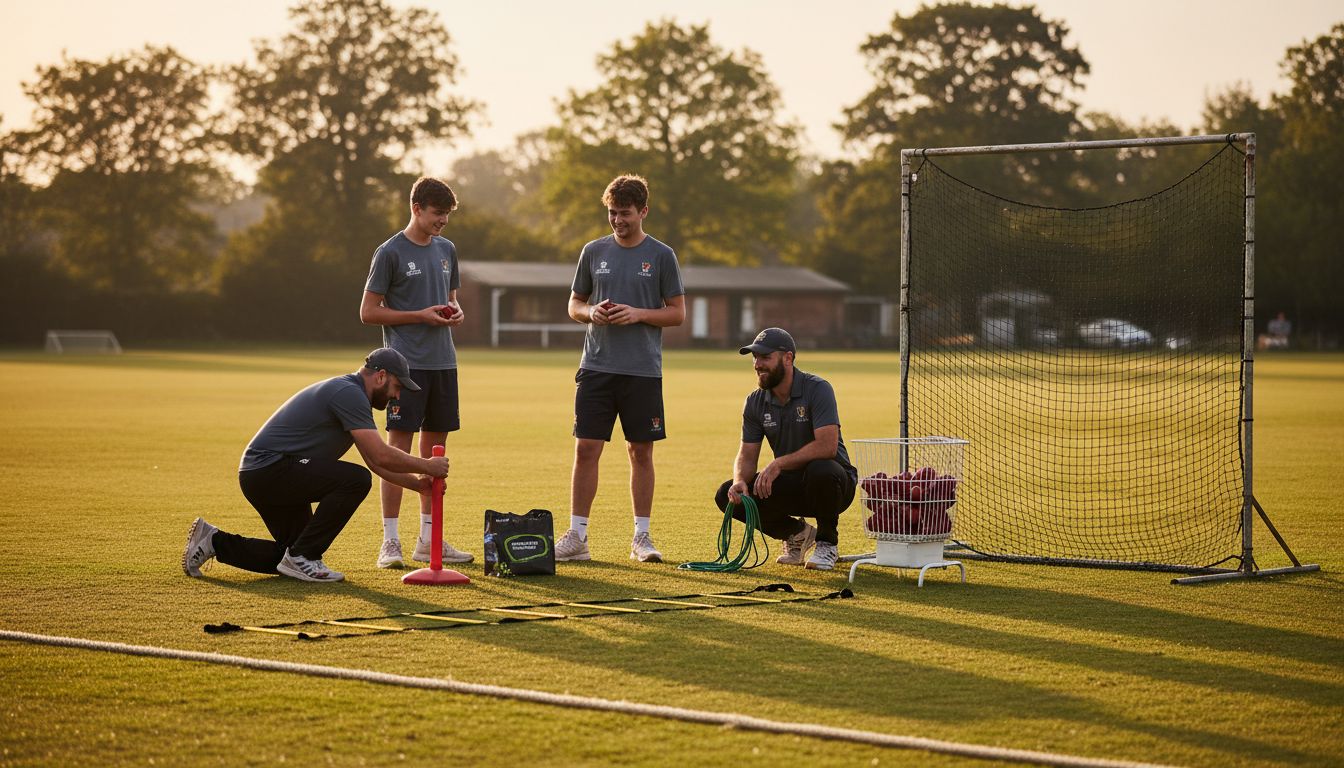
Over 60 percent of American cricket enthusiasts look for proven ways to sharpen their skills at home. Staying competitive requires practical tools that help players break down and master each aspect of the game. Whether you are working on your batting, bowling, or fielding, the right training equipment delivers focused repetition that builds muscle memory and confidence. Explore how specific cricket training aids can make targeted practice more effective for every American player.
Table of Contents
- 1. Batting Tees To Improve Swing Techniques
- 2. Bowling Machines For Consistent Practice
- 3. Training Balls For Better Control And Grip
- 4. Agility Ladders To Enhance Footwork Speed
- 5. Rebound Nets For Fielding Reflex Drills
- 6. Resistance Bands For Building Strength
- 7. Smart Sensors For Performance Tracking
Quick Summary
| Takeaway | Explanation |
|---|---|
| 1. Focus on Technique with Batting Tees | Use batting tees for consistent practice on swing mechanics, emphasizing movement patterns and contact points. |
| 2. Utilize Bowling Machines for Precise Repetitions | Practice with bowling machines to simulate match conditions and improve batting through controlled ball delivery. |
| 3. Enhance Grip and Control with Training Balls | Training balls help refine handling and muscle memory; start with lighter balls before progressing to heavier options. |
| 4. Improve Footwork Speed with Agility Ladders | Regular agility ladder drills enhance foot coordination, balance, and speed, crucial for effective cricket performance. |
| 5. Track Performance with Smart Sensors | Use smart sensors for detailed insights into your batting and bowling techniques, facilitating data-driven adjustments to improve skills. |
1. Batting Tees to Improve Swing Techniques
Mastering swing techniques requires consistent and targeted practice. Batting tees provide a stationary platform that allows cricketers to focus exclusively on perfecting their swing mechanics without the complexity of a moving ball.
Training with batting tees enables players to isolate and refine core movement patterns in their batting technique. By removing ball variability, athletes can concentrate on critical aspects like body positioning, bat trajectory, and contact point. A systematic review analyzing cricket batting mechanics highlights the importance of understanding initial movements and backswing for optimal performance.
To maximize batting tee training, start by setting the tee at different heights to simulate various pitch conditions. Practice your swing at waist, chest, and shoulder levels to develop adaptability. Focus on maintaining a consistent stance, keeping your head still, and executing a smooth bat path through the imaginary contact zone.
Pro tip: Record your practice sessions to analyze your technique. Look for smooth weight transfer, balanced body alignment, and a controlled follow through. Start with 50 repetitions per session, gradually increasing complexity and speed as your muscle memory develops. Batting tees transform technical understanding into instinctive batting skill.
Remember, precision trumps power. Each swing is an opportunity to build muscle memory and confidence.
2. Bowling Machines for Consistent Practice
Bowling machines represent a technological breakthrough in cricket training, offering players a reliable method to practice their batting skills with precision and repeatability. These mechanical training aids transform how cricketers develop their techniques by providing consistent and controlled ball delivery.
Innovative research in bowling machine design reveals advanced mechanisms that simulate real game scenarios with remarkable accuracy. The machines operate on sophisticated principles like catapult launching and spiral spring rebound recovery, enabling players to experience varied bowling styles and speeds without depending on a human bowler.
Key Benefits of Bowling Machine Training:
- Consistent ball speed and trajectory
- Ability to practice specific types of deliveries
- Control over difficulty level
- Unlimited repetitive practice
When using a bowling machine, start by setting a manageable speed and gradually increase complexity. Focus on your defensive techniques first, then progress to attacking shots. Practice different angles and heights to simulate match conditions and develop comprehensive batting skills.
Pro tip: Record your practice sessions to analyze your technique. Pay attention to your footwork, bat swing, and body positioning. Aim for 100 to 200 repetitions per session, concentrating on quality over quantity. A bowling machine transforms random practice into structured skill development.
3. Training Balls for Better Control and Grip
Training balls are a critical component in developing precise cricket skills, offering players a targeted approach to improving grip, control, and muscle memory. These specialized practice balls come in various weights and materials designed to enhance specific aspects of a player’s technique.
Types of Training Balls:
- Weighted practice balls
- Soft touch training balls
- Reaction training balls
- Synthetic leather training balls
Research examining performance characteristics suggests that specialized training equipment can significantly impact a player’s physical adaptability and skill development. Different ball types challenge players to refine their grip, hand eye coordination, and muscle response.
When practicing with training balls, start with lighter versions to develop proper technique. Focus on maintaining a consistent grip and smooth release. Gradually progress to heavier balls to build strength and muscle memory. Practice different grips using your dominant and non dominant hands to develop comprehensive skills.
Pro Training Techniques:
- Use weighted balls for strength training
- Practice precise release points
- Experiment with different grip techniques
- Incorporate varied throwing distances
Consistent practice with training balls transforms mechanical movements into instinctive cricket skills. Aim for quality repetitions rather than mindless throwing. Track your progress and adjust your training approach to continually challenge yourself.
4. Agility Ladders to Enhance Footwork Speed
Agility ladders are a game changing training tool that transforms cricket players’ footwork precision and speed. These simple yet powerful training aids help develop quick directional changes, balance, and explosive movement essential for superior on field performance.
Research examining physical performance characteristics underscores the importance of targeted physical conditioning in cricket. Agility ladders provide a structured approach to developing neuromuscular coordination and rapid foot placement skills critical for batting, fielding, and overall athletic performance.
Key Footwork Drill Categories:
- Linear speed drills
- Lateral movement exercises
- Crossover step training
- Backward movement sequences
- Zigzag pattern challenges
Start with basic drills like single foot runs and two foot hops. Progress to more complex patterns that challenge your coordination and reaction time. Focus on maintaining light, quick steps and keeping your upper body stable. Aim for precision over speed initially.
Training Recommendations:
- Practice 15 to 20 minutes daily
- Vary drill complexity weekly
- Use video recording to analyze technique
- Incorporate ladder drills into regular cricket training
Consistent agility ladder training transforms mechanical movements into fluid athletic performance. The key is mindful repetition and progressive complexity. Your footwork will become faster, more intuitive, and game ready.
5. Rebound Nets for Fielding Reflex Drills
Rebound nets are a revolutionary training tool that transform fielding practice by simulating unpredictable ball trajectories and challenging a player’s reaction time. These specialized nets create dynamic training environments that push cricketers to develop lightning fast reflexes and precise catching techniques.
Performance research indicates that targeted physical conditioning dramatically improves athletic response. Rebound nets offer a systematic approach to developing muscle memory, hand eye coordination, and split second decision making skills essential for exceptional fielding performance.
Rebound Net Drill Categories:
- Close catching practice
- Slip cordon training
- Ground fielding reflexes
- Boundary line catching scenarios
- Unexpected angle drills
Start with predictable rebounds and gradually increase complexity. Focus on maintaining a low body position, keeping your eyes locked on the ball, and developing consistent hand positioning. Practice both forehand and backhand catching techniques to build comprehensive fielding skills.
Advanced Training Recommendations:
- Use varying ball speeds
- Practice with different ball types
- Incorporate lateral movement
- Train in multiple lighting conditions
- Record and analyze your performance
Consistent rebound net training transforms mechanical movements into instinctive fielding responses. The key is mindful repetition and progressive complexity. Your fielding will become more reactive, confident, and game ready.
6. Resistance Bands for Building Strength
Resistance bands are a versatile and compact training tool that can transform cricket players’ strength training without requiring extensive equipment. These flexible bands provide progressive resistance that targets specific muscle groups essential for powerful batting and bowling techniques.
Performance research investigating physical characteristics highlights the importance of targeted muscle conditioning. Resistance bands allow cricketers to develop functional strength through variable resistance levels that mimic game movement patterns.
Key Muscle Groups to Target:
- Shoulder rotator muscles
- Core stabilization
- Arm and forearm strength
- Lower body power generation
- Trunk rotation muscles
Begin with lighter resistance bands and focus on proper form. Integrate band exercises that replicate cricket specific movements like batting swings and bowling actions. Perform controlled movements with emphasis on technique rather than speed.
Resistance Band Training Strategies:
- Use multiple resistance levels
- Maintain consistent tension
- Perform slow controlled movements
- Target both concentric and eccentric muscle actions
- Combine with bodyweight exercises
Consistent resistance band training develops muscular endurance and explosive power. The key is progressive overload and maintaining perfect technique. Your cricket performance will improve through smarter strength development.
7. Smart Sensors for Performance Tracking
Smart sensors represent the cutting edge of cricket performance technology, providing players with granular insights into their technical mechanics and physical capabilities. These advanced devices transform raw athletic data into actionable intelligence that can dramatically accelerate skill development.
Advanced machine learning research demonstrates how technology can revolutionize athletic training through precise performance analytics. Smart sensors capture biomechanical data points that were previously impossible to measure consistently including bat swing speed, release angles, body positioning, and movement efficiency.
Key Performance Metrics Tracked:
- Bat swing velocity
- Bowling arm speed
- Body movement efficiency
- Reaction time
- Kinetic energy transfer
- Biomechanical alignment
Start by attaching sensors to cricket equipment or wearing wearable tracking devices. Focus on understanding baseline measurements before attempting significant technique modifications. Analyze data trends over time rather than obsessing over individual session results.
Smart Sensor Training Strategies:
- Collect consistent baseline measurements
- Compare performance across multiple sessions
- Identify subtle technique improvements
- Track long term athletic progression
- Use data to personalize training approaches
Consistent smart sensor tracking transforms subjective training into a data driven improvement process. The key is patient analysis and incremental technique refinement. Your cricket performance will evolve through intelligent, measured progress.
Below is a comprehensive table summarizing the various training tools and techniques for improving cricket skills as discussed in the article.
| Training Tool | Purpose | Key Techniques & Benefits |
|---|---|---|
| Batting Tees | Improve swing techniques | Allows isolation of swing mechanics; focus on body positioning and bat trajectory; record sessions for analysis; precision over power |
| Bowling Machines | Consistent batting practice | Provides repeatable and precise ball delivery; adjust speed and complexity; record sessions to analyze techniques; aim for quality over quantity |
| Training Balls | Enhance grip and control | Variety of ball types to improve grip and muscle memory; start with light balls, progress to heavier; develop hand-eye coordination |
| Agility Ladders | Increase footwork speed | Develops quick directional changes and balance; start with basic drills, increase complexity; practice 15-20 minutes daily |
| Rebound Nets | Fielding reflex drills | Simulates unpredictable ball trajectories; practice both forehand and backhand techniques; train in varied conditions |
| Resistance Bands | Build strength | Provides progressive resistance targeting key muscles; focus on form and game-specific movements; use varying resistance levels |
| Smart Sensors | Track performance | Offers granular data on technical mechanics; track progress over time; use data to personalize training approaches |
Elevate Your Cricket Training with Expert Equipment from CricketKingdom
Mastering your swing, improving footwork, and sharpening reflexes all start with the right training aids. This article highlights key tools like batting tees, bowling machines, and agility ladders that address common challenges such as developing precise technique, consistent practice, and enhancing speed and control. Whether you aim to build muscle memory or perfect your batting mechanics, having professional-grade equipment makes all the difference.
At CricketKingdom, we understand the dedication behind every practice session. Our extensive collection of cricket training aids and high-quality gear supports players at every level. From trusted bats that come with free batting oiling and knocking services to training accessories tailored to boost your strength and reflexes, we provide solutions that transform effort into skill.

Ready to take your cricket training to the next level? Explore our range of expert-approved cricket equipment and accessories at CricketKingdom.co.uk. Enjoy free delivery on orders over £100 and flexible payment options like Klarna and Clearpay. Your development deserves the finest tools available. Shop now and start turning practice into performance.
Frequently Asked Questions
How do batting tees help improve my swing techniques?
Batting tees provide a stationary platform for cricketers to focus on perfecting swing mechanics without the distraction of a moving ball. To effectively use a batting tee, adjust its height to match different pitch conditions and practice your swing with precision.
What are the benefits of using a bowling machine for training?
Bowling machines deliver consistent ball speed and trajectory, allowing players to practice specific types of deliveries repeatedly. Set the machine to a manageable speed and gradually increase it as your skills improve to build confidence in your batting technique.
How can training balls enhance my grip and control?
Training balls are designed to improve grip strength and muscle memory, helping players refine their batting and bowling techniques. Start with lighter training balls to focus on technique, and progressively use heavier options to build strength.
What types of drills can I perform with agility ladders?
Agility ladders are excellent for developing footwork speed and coordination. Incorporate linear speed drills and lateral movement exercises into your routine, aiming for about 15 to 20 minutes of practice daily to see improvement in your agility over a few weeks.
How do rebound nets improve my fielding skills?
Rebound nets simulate unpredictable ball trajectories, enhancing reaction time and catching techniques. Begin with predictable rebounds and gradually increase complexity, ensuring to practice in various conditions for better adaptability.
What is the role of resistance bands in cricket training?
Resistance bands help build functional strength by providing variable resistance that mimics game movements. Integrate band exercises into your training regimen 2-3 times a week, focusing on controlled movements to develop power and endurance.
Recommended
- 7 Essential Cricket Training Tools List for Players – The Cricket Kingdom
- 7 Must-Have Cricket Accessories for Every Player – The Cricket Kingdom
- Top 10 Cricket Drills to Improve Your Game | Cricket Kingdom
- 7 Cricket Accessories to Own for Better Performance – The Cricket Kingdom
- Beginner Strength Training: Achieve Results Step by Step – LeanAndFit
- 7 Key Player Development Tips for Coaches – Hoop Mentality