
How to Select Batting Gloves for the Perfect Cricket Fit

Cricket might be a global sport, yet many american players find choosing the right batting gloves surprisingly complicated. Over 80 percent of batters say the smallest mistake in glove selection can affect both comfort and performance on the field. With so many styles, sizes, and materials, it is important to match your unique needs to your cricket gear. This guide walks through key steps that help every american cricket enthusiast pick gloves that truly fit and protect.
Table of Contents
- Step 1: Assess Your Cricket Playing Style
- Step 2: Measure and Match Your Hand Size
- Step 3: Explore Materials and Padding Options
- Step 4: Evaluate Fit and Comfort In-Person
- Step 5: Test Grip and Flexibility Before Purchase
Quick Summary
| Key Insight | Explanation |
|---|---|
| 1. Identify Your Playing Style | Choose batting gloves that align with your cricket style—aggressive or defensive—to ensure optimal performance. |
| 2. Measure Hand Size Accurately | Proper glove fit is crucial; measure your hand and consult sizing charts for the best match. |
| 3. Evaluate Materials for Quality | Select gloves made from durable materials like sheepskin and reinforced padding for maximum protection. |
| 4. Test Fit and Comfort In-Person | Always try gloves on to ensure they allow free movement while providing protection and comfort. |
| 5. Assess Grip and Flexibility | Conduct movement tests in-store to ensure gloves offer flexibility and maintain a strong grip during play. |
Step 1: Assess Your Cricket Playing Style
Understanding your unique cricket playing style is critical when selecting batting gloves that will enhance your performance and comfort on the pitch. According to eagletherapy, players facing different bowling styles require specialized equipment that matches their specific gameplay approach.
Your playing style fundamentally determines the type of batting gloves you should choose. Are you an aggressive front foot player who loves driving the ball? A back foot defensive specialist? Or perhaps a versatile batsman who adapts quickly? Each style demands different glove characteristics. For aggressive players needing maximum hand protection and flexibility, consider gloves with reinforced padding around the knuckles and fingers. Defensive players might prefer gloves offering superior grip and shock absorption.
Pro tip: When assessing your playing style, analyze your typical shot selections, preferred batting positions, and the types of bowling you most frequently encounter. As eagletherapy suggests, batters facing fast bowlers will have different equipment needs compared to those regularly playing against spin bowlers. A thoughtful evaluation of your personal cricket style will guide you toward batting gloves that feel like a natural extension of your game.
Ready to explore the next steps in finding your perfect batting gloves? Let’s dive into understanding glove materials and construction.
Step 2: Measure and Match Your Hand Size
Finding the perfect batting gloves starts with understanding your exact hand measurements. Law emphasizes that proper fit is essential for both comfort and performance, with gloves needing to fit precisely around the hands and finger roots.
To measure your hand size accurately, you will need a flexible measuring tape. Wrap the tape around the widest part of your palm just below the knuckles, ensuring the tape is snug but not tight. Record this measurement in inches or centimeters.
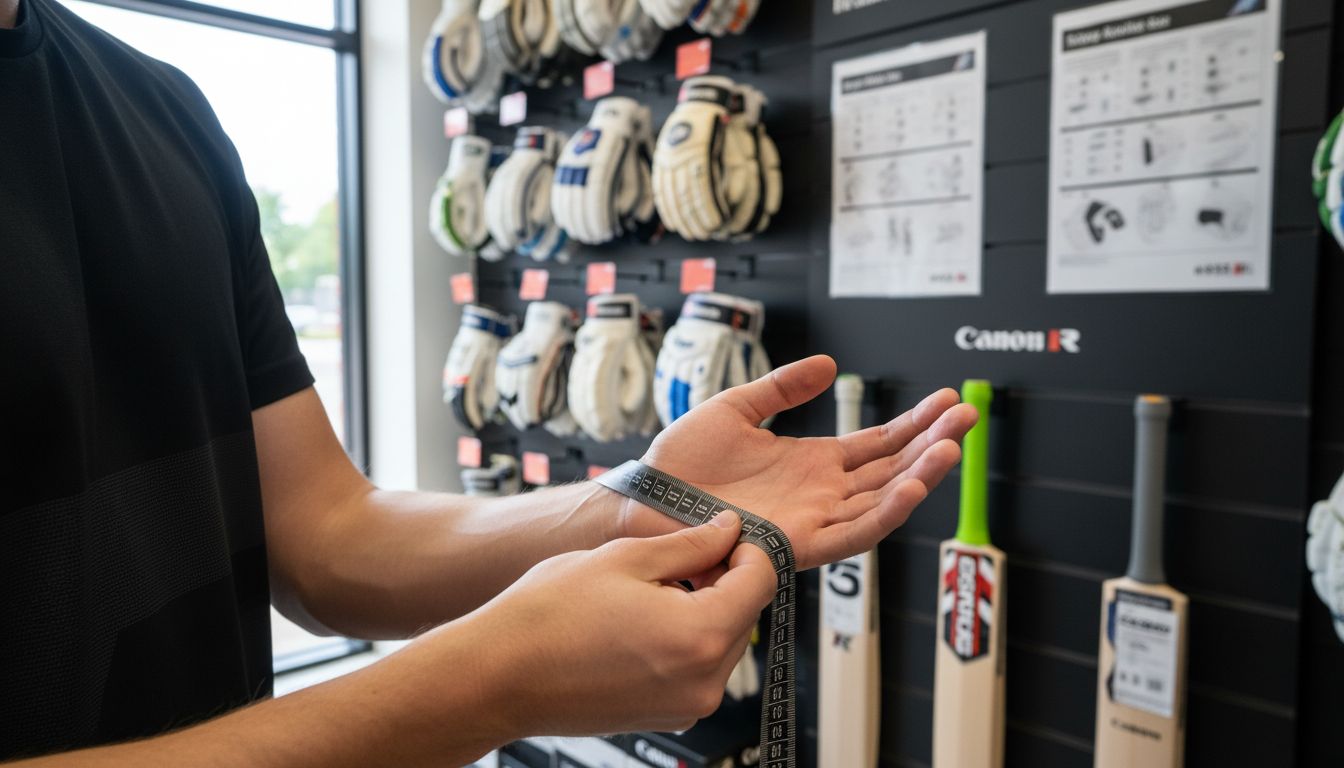 Most cricket equipment manufacturers provide sizing charts that correlate hand circumference with glove sizes ranging from small to extra large. Pay close attention to both hand width and hand length when selecting your gloves.
According to eagletherapy, your batting gloves should offer adequate padding while maintaining flexibility. A well-fitted glove should feel like a second skin, allowing you to grip the bat firmly without restricting hand movement. Pro tip: If you are between sizes, always choose the slightly larger size to ensure comfortable movement and prevent potential hand fatigue during long batting sessions.
Ready to explore the different materials and construction of cricket batting gloves? Let’s move forward and understand what makes a high quality batting glove.
Step 3: Explore Materials and Padding Options
Selecting the right materials for your cricket batting gloves is crucial for both protection and performance. Law specifies precise material standards, noting that quality batting gloves typically use sheepskin with specific thickness requirements to ensure durability and player safety.
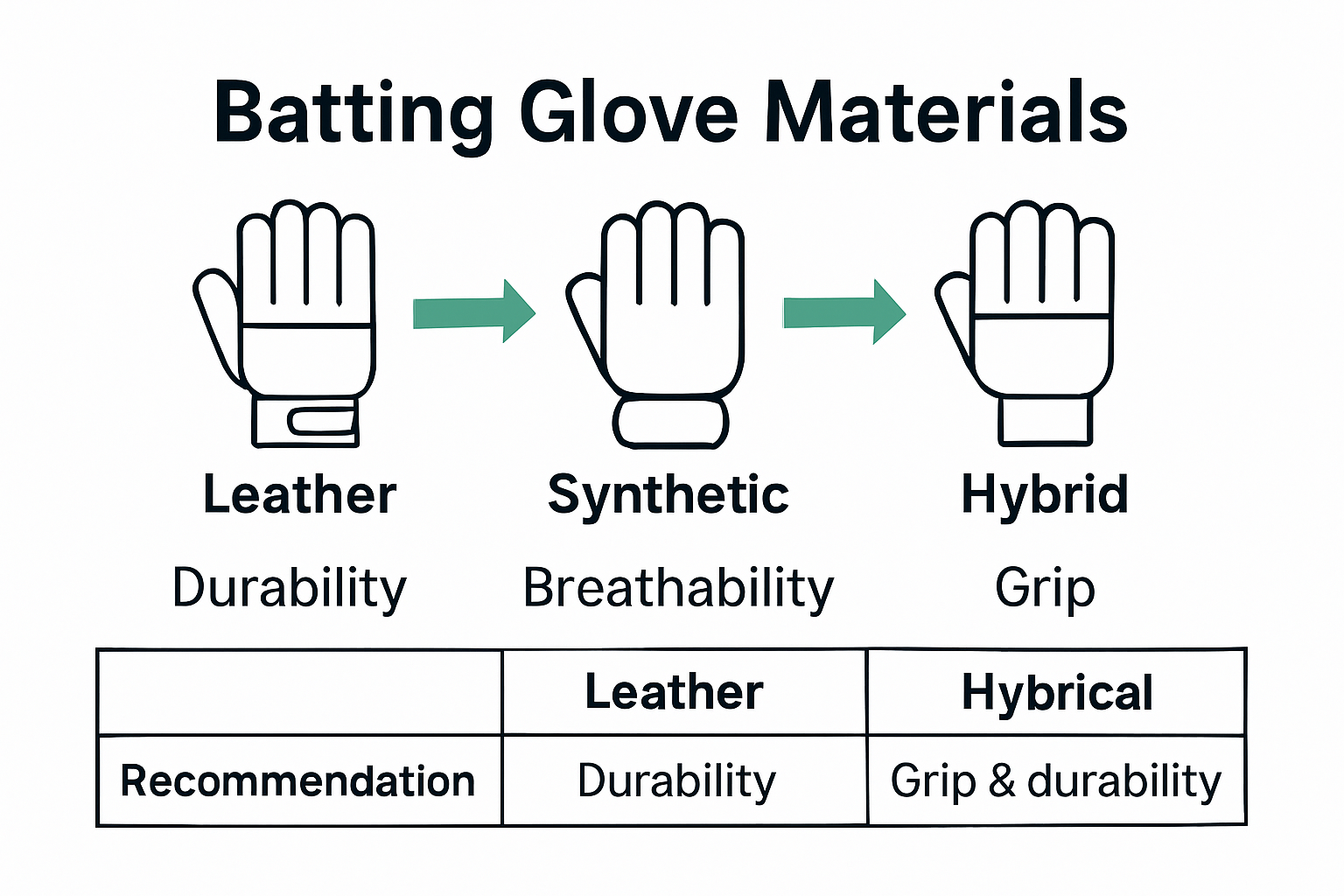
Most high performance batting gloves combine multiple materials to maximize comfort and protection. The palm area often features leather or synthetic leather for superior grip, while the back of the hand incorporates additional padding made from foam or specialized protective materials. These strategic material choices help absorb shock from fast deliveries and reduce the risk of hand injuries. Look for gloves with reinforced knuckle protection and breathable fabric panels that allow air circulation and prevent excessive sweating during long batting sessions.
As eagletherapy warns, choosing the right batting gloves can make the difference between a minor bruise and a serious hand injury. Pro tip: Prioritize gloves with multilayered padding around the fingers and metacarpal areas. Modern cricket gloves often feature advanced shock absorption technologies that provide maximum protection without compromising your ability to feel the bat and maintain a strong grip.
Ready to understand how different playing conditions might impact your glove selection? Let’s explore the relationship between environmental factors and batting glove performance.
Step 4: Evaluate Fit and Comfort In-Person
Perfecting your batting glove selection requires an in-person evaluation that goes beyond measurements and specifications. Law emphasizes that gloves must provide complete freedom of movement for fingers and wrists, ensuring optimal performance during critical batting moments.
When trying on batting gloves, simulate actual batting movements to assess their true comfort and functionality. Grip a cricket bat and perform several practice swings, paying close attention to how the gloves feel during different hand positions and motions. Check for potential areas of stiffness or pinching, particularly around the knuckles and wrist areas. The gloves should feel like a natural extension of your hand, allowing smooth and unrestricted movement while providing secure protection.
As eagletherapy recommends, balance is key when selecting batting gloves. They should offer adequate padding without compromising your ability to grip the bat effectively. Pro tip: Perform a quick flexibility test by making a fist and then spreading your fingers wide. If the gloves restrict this motion or feel uncomfortably tight, they are not the right fit for you.
Remember that a perfect pair of batting gloves should provide protection, enhance your grip, and feel almost unnoticeable during play.
Ready to make your final selection? Let’s discuss how to make the ultimate decision on your perfect cricket batting gloves.
Step 5: Test Grip and Flexibility Before Purchase
Selecting the perfect batting gloves requires a comprehensive assessment of grip and flexibility that goes beyond visual inspection. Law emphasizes that cricket gloves must provide complete freedom of movement for fingers and wrists, making hands on testing absolutely critical.
To thoroughly evaluate grip and flexibility, perform a series of practical tests in the store. Start by gripping a cricket bat or a similar handle to simulate actual playing conditions. Rotate your wrist, flex your fingers, and mimic batting motions to understand how the gloves respond to different movements. Pay special attention to the webbing between your thumb and index finger, which experiences significant stress during batting. Check for areas where the gloves might pinch or restrict natural hand movements.
As eagletherapy recommends, your batting gloves should maintain flexibility while providing adequate protection. Pro tip: Conduct a quick mobility test by spreading your fingers wide and making a tight fist repeatedly. If the gloves feel restrictive or cause discomfort during these movements, they are not suitable. Explore our guide on understanding cricket grip to complement your glove selection process and ensure you choose equipment that enhances your performance.
Ready to make your final decision? Let’s review the key factors to consider before completing your purchase.
Find Your Perfect Cricket Batting Gloves at Cricket Kingdom
Selecting the right batting gloves that fit your unique playing style and hand size is essential for comfort, protection, and performance on the pitch. This article highlights the challenge of balancing padding, flexibility, and grip while ensuring your gloves complement your batting technique. If you want gloves that move seamlessly with your hands, reduce injury risk, and boost confidence every time you face the bowler you need trusted gear designed with these goals in mind.

Explore an extensive range of premium cricket batting gloves at Cricket Kingdom tailored to meet every player’s needs. Whether you require reinforced knuckle protection or superior grip materials, our selection supports all playing styles and hand sizes — backed by real customer reviews and expert advice. Don’t settle for less when you can equip yourself with gloves created to enhance every swing. Visit https://cricketkingdom.co.uk today and step up your cricket game with confidence.
Frequently Asked Questions
How can I determine my cricket playing style to select the right batting gloves?
Understanding your cricket playing style helps match glove features to your gameplay. Analyze your typical shot selections and preferred batting positions to identify whether you are an aggressive player, a defensive specialist, or a versatile batsman.
What is the best way to measure my hand size for batting gloves?
To measure your hand size, use a flexible measuring tape to wrap around the widest part of your palm just below the knuckles. Record the measurement in inches or centimeters, and then check sizing charts from manufacturers to find the right glove size.
What materials should I look for in quality batting gloves?
High-quality batting gloves typically use sheepskin or synthetic leather for the palm and foam padding for protection on the back of the hand. Prioritize gloves that offer reinforced knuckle protection and breathable fabric to enhance comfort and performance during play.
How do I assess the fit and comfort of batting gloves in person?
When trying on batting gloves, grip a cricket bat and simulate batting movements to evaluate comfort. Check for areas of stiffness or pinching, and ensure that the gloves provide a natural feel and allow full freedom of movement without compromising grip.
What tests should I perform to evaluate grip and flexibility before purchasing batting gloves?
To assess grip and flexibility, grip a bat and perform wrist rotations and finger flexing movements. Ensure the gloves do not pinch or restrict movement, and confirm that you can easily make a fist and spread your fingers wide without discomfort.
What key factors should I consider before finalizing my purchase of cricket batting gloves?
Consider the fit, material quality, and padding of the gloves to ensure they enhance your performance. A well-fitted glove should feel secure without restricting hand movement, providing you with both protection and comfort on the pitch.
Recommended
- How to Select Cricket Gloves for Perfect Fit and Protection – The Cricket Kingdom
- 7 Essential Examples of Cricket Gloves for Every Player – The Cricket Kingdom
- Shop Batting Gloves Online in the UK | The Cricket Kingdom
- Role of Cricket Gloves: Complete Guide for Players – The Cricket Kingdom