
Junior Cricket Sizes Explained: Complete Buyer’s Guide

More than 60 percent of young athletes see a noticeable improvement in their skills when using equipment matched to their body size. For american families exploring junior cricket, understanding these sizing standards is key to safety, comfort, and skill growth. With so many options and confusing labels, finding the right fit can be challenging. This guide breaks down how manufacturers define sizes, what measurements matter, and why proper selection supports every young cricketer’s development.
Table of Contents
- Defining Junior Cricket Sizes And Standards
- Key Age Groups And Size Ranges Explained
- How Cricket Bat Sizing Works For Juniors
- Choosing The Right Protective Gear Size
- Common Sizing Mistakes And How To Avoid
Key Takeaways
| Point | Details |
|---|---|
| Importance of Size Matching | Junior cricket equipment should match a player’s age, height, and development stage to ensure safety and optimal performance. |
| Measurement Guidelines | Key measurements include height and arm length, which guide the selection of appropriately sized bats, pads, and protective gear. |
| Common Sizing Mistakes | Avoid oversizing equipment, relying solely on age-based sizing, and underestimating growth to maintain performance and safety. |
| Proper Fitting Approach | Regular measurements and professional fittings help ensure that gear accommodates growth while providing comfort and maximum protection. |
Defining Junior Cricket Sizes and Standards
Understanding junior cricket sizes means recognizing that young players require specialized equipment tailored precisely to their age, height, and skill development. Cricket equipment manufacturers create standardized size ranges to ensure safety, comfort, and optimal performance for growing athletes. These standards help players transition smoothly through different developmental stages.
Junior cricket sizes are typically categorized by age groups and physical measurements, with standard classifications including:
- Under 9 (U9): Players aged 8 and younger
- Under 11 (U11): Players aged 9-10
- Under 13 (U13): Players aged 11-12
- Under 15 (U15): Players aged 13-14
- Under 17 (U17): Players aged 15-16
Each age group corresponds with specific equipment dimensions, ensuring that bats, pads, gloves, and protective gear match a young player’s physical proportions. Junior cricket equipment differences play a critical role in player development, with size-specific design elements that support proper technique and movement.
The primary measurements considered when determining junior cricket sizes include height, arm length, and overall body frame. Manufacturers use these metrics to create progressively larger equipment that grows with the player. Lightweight materials and ergonomic designs help young cricketers maintain proper form while reducing injury risks. Selecting the right size isn’t just about comfort – it’s about providing young athletes with tools that support their skill progression and love for the game.
Key Age Groups and Size Ranges Explained
Understanding the nuanced world of junior cricket equipment requires a comprehensive look at how physical development directly influences gear selection. Precise size matching ensures young players have equipment that supports their physical capabilities and technical growth, with each age group presenting unique equipment requirements.
The primary size ranges for junior cricket equipment break down into critical developmental stages:
- Smallest Sizes (Under 7-9)
- Bat length: 24-26 inches
- Extremely lightweight materials
- Designed for initial skill development
- Early Development (Under 10-12)
- Bat length: 27-28 inches
- Increased weight tolerance
- Enhanced grip and handle design
- Intermediate Stage (Under 13-15)
- Bat length: 29-30 inches
- More robust construction
- Transitional equipment supporting technical refinement
- Advanced Junior Stage (Under 16-18)
- Bat length: 31-32 inches
- Near adult-level equipment specifications
- Advanced material technologies
Physical measurements play a crucial role beyond age classifications. Height-based equipment selection allows manufacturers to create progressively sophisticated gear that adapts to a young athlete’s growth trajectory. This approach ensures not just proper fit, but also supports biomechanical efficiency and reduces potential injury risks associated with ill-fitting equipment.
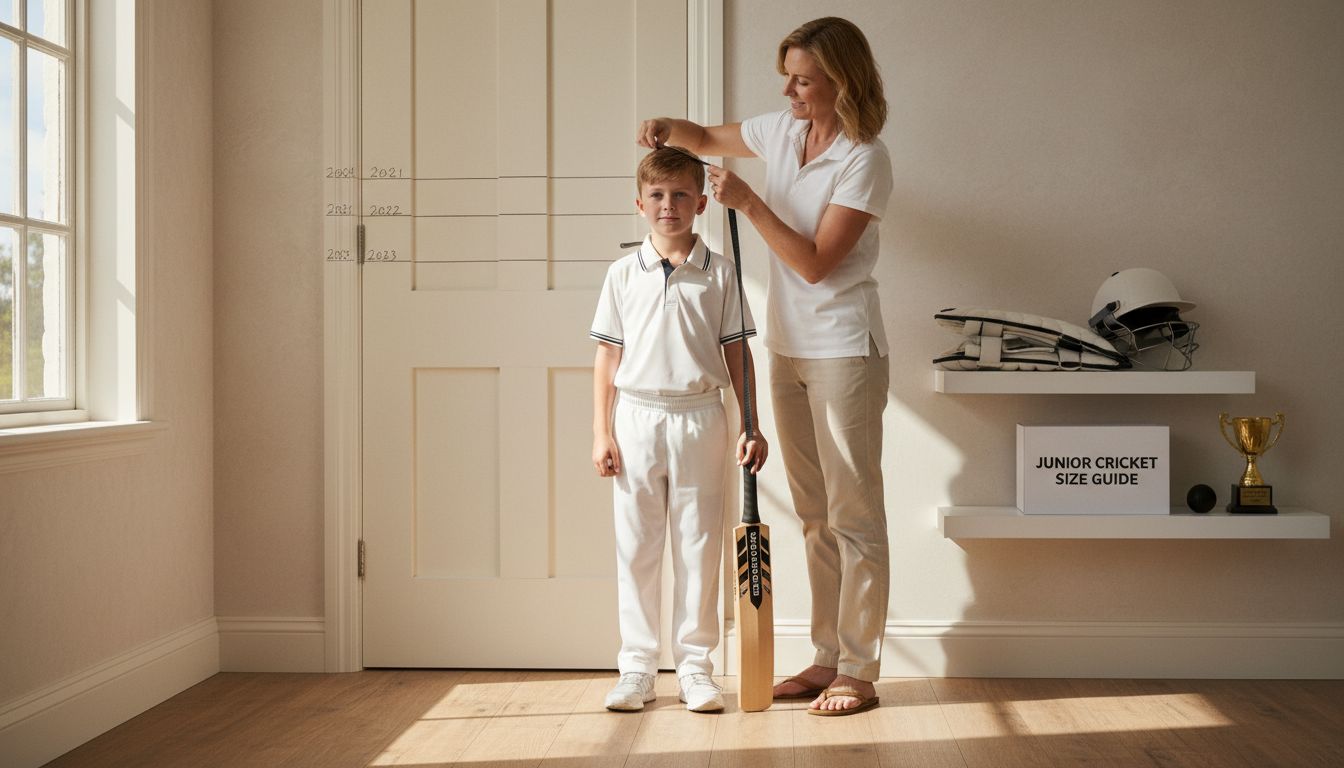
Beyond basic measurements, modern junior cricket equipment integrates advanced ergonomic principles. Manufacturers now design gear that accommodates rapid physical changes, using flexible materials and adjustable components. The goal isn’t just protection – it’s creating a seamless progression that allows young cricketers to develop their skills with confidence and comfort.
How Cricket Bat Sizing Works for Juniors
Cricket bat sizing for junior players involves a precise science of matching equipment to physical development. Comprehensive height measurements are the primary method manufacturers use to ensure young cricketers have perfectly proportioned equipment that supports their technical growth and physical capabilities.
The bat sizing process typically follows these critical measurement guidelines:
- Height Correlation
- 3’6" to 4’3": Bat size 3
- 4’3" to 4’9": Bat size 4
- 4’9" to 5’3": Bat size 5
- 5’3" to 5’9": Bat size 6
- Over 5’9": Adult sized bats
Cricket bat sizing isn’t just about height – it’s about creating an ergonomic extension of the player’s body. Understanding cricket bat selection requires considering multiple factors beyond simple measurements, including:
- Physical Strength
- Playing Style
- Skill Level
- Batting Technique
Manufacturers invest significant research into developing junior cricket bats that accommodate growth stages. Modern bats incorporate lightweight materials, balanced weight distribution, and adaptable handle designs that allow young players to develop proper technique while maintaining comfort and control. The goal is to create equipment that grows with the player, supporting their evolving skills and physical capabilities without compromising performance or safety.
Professional coaches emphasize that proper bat sizing goes beyond numerical measurements. It’s about finding the perfect balance between equipment specifications and individual player characteristics. A well-selected bat can dramatically improve a junior cricketer’s confidence, technique, and overall enjoyment of the game, making the sizing process a critical component of a young athlete’s developmental journey.
Choosing the Right Protective Gear Size
Protective gear sizing for junior cricketers requires meticulous attention to multiple physical measurements and safety considerations. Cricket helmet sizing represents a critical starting point in ensuring young players have comprehensive protection during practice and matches.
The key protective gear components for junior cricketers include:
-
Helmets
- Circumference measurement
- Head shape considerations
- Adjustable padding systems
-
Batting Pads
- Leg length measurement
- Knee protection coverage
- Flexibility and mobility
-
Gloves
- Hand width measurement
- Finger length consideration
- Grip and flexibility
Selecting protective equipment involves more than simple size matching. Young cricketers require gear that accommodates rapid physical growth while providing maximum protection and comfort. Manufacturers now design junior protective gear with expandable features, adjustable straps, and modular padding systems that can adapt to changing body dimensions.
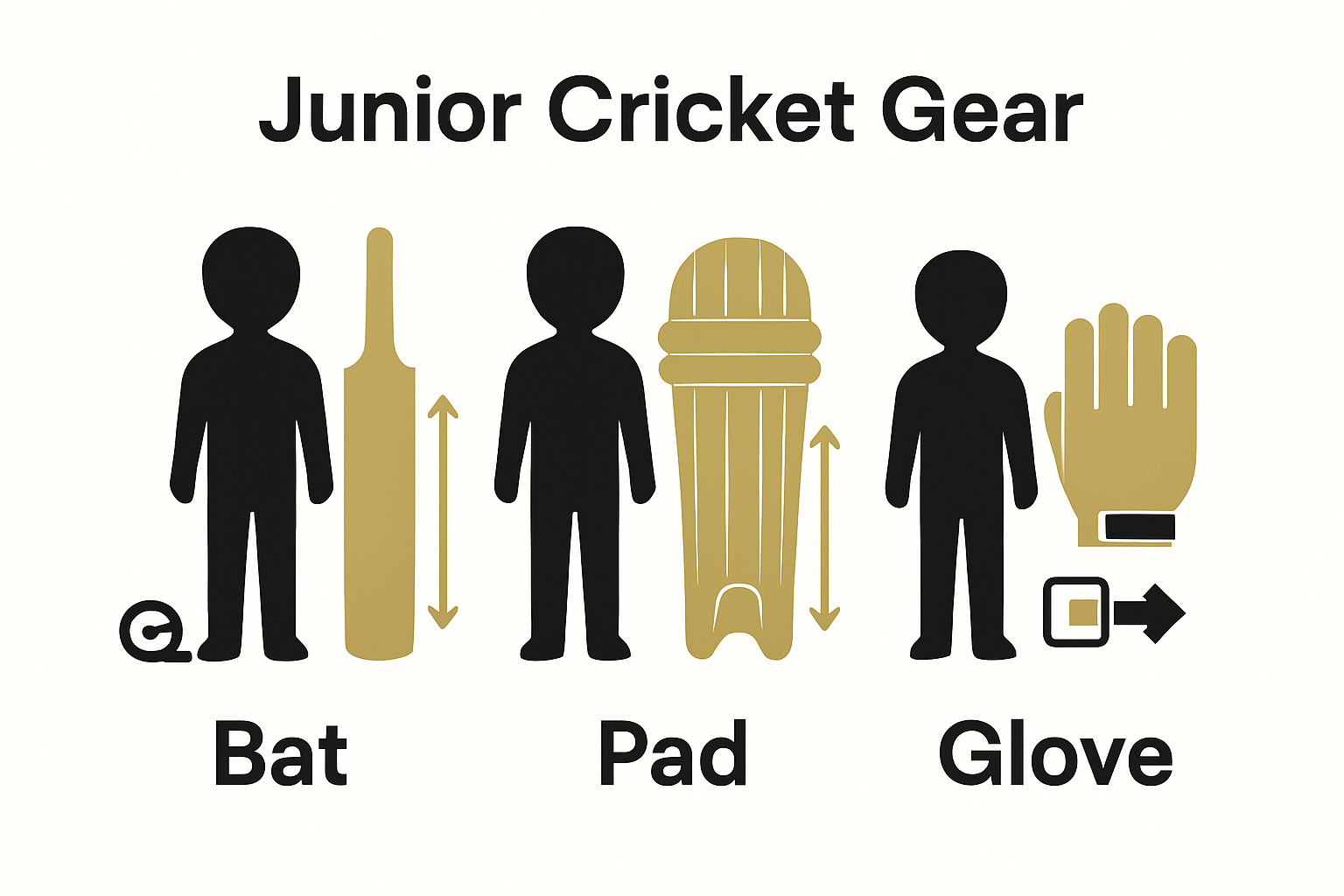
Professional coaches recommend a comprehensive fitting approach that considers not just current size, but potential growth trajectories. A well-fitted piece of protective gear should allow full range of motion, provide complete coverage, and feel like a natural extension of the player’s body. The right protective equipment can significantly boost a young cricketer’s confidence, enabling them to play more aggressively and focus entirely on developing their skills without fear of injury.
Common Sizing Mistakes and How to Avoid
Junior cricket equipment sizing presents numerous potential pitfalls that can compromise a young player’s performance and safety. Understanding cricket gear selection requires recognizing the most common mistakes parents and young athletes make when purchasing protective equipment.
The most frequent sizing errors include:
-
Oversizing Equipment
- Buying gear “to grow into”
- Sacrificing current performance for future use
- Reduced mobility and control
-
Ignoring Individual Proportions
- Relying solely on age-based sizing
- Overlooking unique body measurements
- Neglecting individual physical development
-
Underestimating Growth Rates
- Purchasing fixed-size equipment
- Failing to account for rapid physical changes
- Frequent replacement costs
Professional coaches emphasize that proper sizing goes beyond simple measurements. Young cricketers require equipment that provides a precise balance between current fit and potential growth, ensuring optimal performance and protection. Adjustable features, lightweight materials, and ergonomic designs now help mitigate traditional sizing challenges.
To avoid common mistakes, players and parents should implement a comprehensive sizing strategy. This involves regular measurements, consulting professional fitters, trying on multiple sizes, and prioritizing comfort and mobility over arbitrary size classifications. The goal is creating a seamless connection between the player and their equipment, allowing natural skill development without restrictive gear limitations.
Find the Perfect Junior Cricket Gear for Your Rising Star
Choosing the right junior cricket sizes can feel overwhelming especially when you need exact fits that support growth, comfort, and safety. Many parents and young players struggle with avoiding oversizing or ignoring individual proportions which hampers performance and confidence. At CricketKingdom.co.uk, we understand these challenges and offer carefully selected cricket equipment designed to match each stage of a young cricketer’s development from helmet sizing to cricket bat selection.
Our expert-curated range prioritizes precision fitting with adjustable and ergonomically designed gear so your child can enjoy full mobility while feeling protected. Whether you are looking for beginner-friendly lightweight bats or advanced junior pads that offer maximum safety, CricketKingdom.co.uk provides trusted solutions wrapped with excellent customer service including free shipment on orders over £100.
Experience why thousands of cricket families rely on us for quality junior cricket equipment. Don’t let sizing doubts slow your young player down. Take the first step towards a confident, protected cricket journey by exploring our wide selection and personalized services like free bat oiling and knocking today.
Explore Quality Junior Cricket Gear

Get the perfectly sized gear that grows with your child and boosts their game now. Visit CricketKingdom.co.uk for all your junior cricket needs and see the difference precise sizing makes in every swing and run.
Frequently Asked Questions
What are the different junior cricket size categories based on age?
Junior cricket sizes are categorized into age groups: Under 9 (U9), Under 11 (U11), Under 13 (U13), Under 15 (U15), and Under 17 (U17).
How do I determine the correct cricket bat size for my child?
The correct cricket bat size can be determined by correlating your child’s height with standardized bat sizes. For instance, children who are 3’6" to 4’3" should use a bat size 3, while those over 5’9" should use adult-sized bats.
What factors should I consider when choosing protective gear for junior cricketers?
When choosing protective gear, consider factors such as proper fit based on measurements, adjustable features to accommodate growth, and ensuring full mobility while providing adequate protection.
What are common sizing mistakes to avoid when purchasing junior cricket equipment?
Common mistakes include buying oversized equipment, ignoring individual body proportions, and underestimating rapid growth rates. It’s essential to get the correct size for optimal performance and safety.
Recommended
- Complete Guide to Differences in Junior Cricket Gear – The Cricket Kingdom
- How to Buy Junior Cricket Kit: Step-by-Step Guide – The Cricket Kingdom
- How to Select Junior Cricket Kit for Best Performance – The Cricket Kingdom
- Choosing Junior Cricket Gear: A Complete Buying Guide – The Cricket Kingdom